
Tick Control in Chula Vista, CA
Reach out now for your free, no-obligation consultation and estimate.
- Ants & rodents
- Straightforward pricing
- Local technicians
Call for a rate estimate
- Fast, courteous service
- Clear, upfront pricing
Our local team is taking calls now.





Year-Round Protection:
Ticks don't take vacations in Southern California. Our team provides continuous monitoring and treatment to keep your Chula Vista property safe every season.
Local Expertise You Can Trust
We understand Chula Vista's unique tick challenges. Our specialists use proven methods tailored to San Diego County's climate and landscape.
Convenient Scheduling
Busy schedule? We accommodate your availability with flexible appointment times that work around your commitments, including weekend options.

Tick Control in Chula Vista
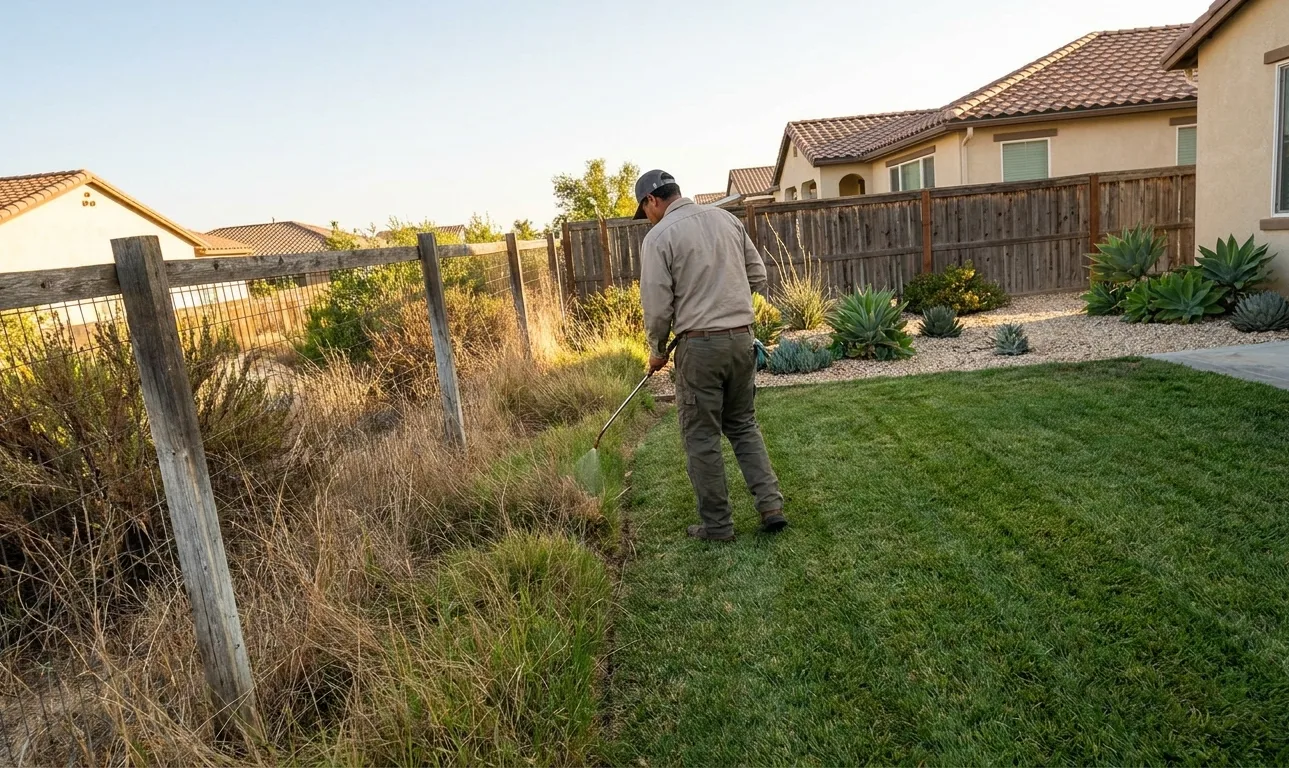
Ticks are not evenly spread across a property. They cannot fly or jump, and they dry out quickly in open sun, so they concentrate in a narrow band of habitat — the shaded, humid edge where mown ground meets tall grass, brush or leaf litter. That is where they wait, and it is where control work has to be aimed. Treating an open lawn achieves very little, because there were never many ticks on it.
In Chula Vista the risk sits with properties backing onto canyon, open space or trail — the eastern hillside communities, the Sweetwater corridor and anywhere with a brushy boundary. Households with dogs that walk in those areas see the most activity, because the dog carries them back.
The Species That Matter Here
Western Black-Legged Tick
The one associated with Lyme disease in California. Found in cooler, shaded, humid habitat — leaf litter, oak and brush margins, trail edges — and most active in the wetter months. Prevalence in Southern California is lower than in the north-east, but it is present and it is the reason careful removal matters.
Brown Dog Tick
The one that behaves unlike any other tick here, and the one that causes the worst infestations. It can complete its entire life cycle indoors, which means a house or kennel can become infested without any outdoor habitat at all. They climb, so they turn up along wall-to-ceiling junctions, behind picture frames and around door casings — places nobody thinks to look for a tick.
Pacific Coast and American Dog Ticks
Encountered along trail edges and grassy margins, typically on dogs and people returning from a walk.
Our Tick Control Process
Habitat Assessment
We identify the transition zones on your property — the fence line, the boundary with open ground, shaded planting beds, leaf litter under shrubs, woodpiles and any area a dog rests. That mapping is what makes the treatment efficient rather than indiscriminate.
Perimeter and Edge Treatment
Treatment is applied to the habitat band rather than broadcast across the property: the brushy margin, the base of fence lines, shaded ground cover and leaf litter. This concentrates the work where ticks actually are and keeps product off open lawn and flowering plants.
Habitat Modification
Often the most durable part. We will point out what to change: cutting the grass short at the boundary, removing leaf litter, thinning dense ground cover, moving woodpiles off the ground and into the sun, and creating a dry mulch or gravel strip between the brush line and the areas you use. Ticks struggle to cross a dry, sunny break, and that strip does more long-term work than repeat treatment.
Indoor Treatment for Brown Dog Tick
Where we confirm brown dog tick, the job changes completely and becomes an interior one. That means treating along skirting boards, wall-ceiling junctions, cracks, pet resting areas and kennels, combined with veterinary treatment of the animals — and repeat visits, because the life stages are staggered.
Follow-Up
Tick life cycles run long and the stages emerge at different times, so properties with genuine pressure do better on a scheduled programme through the active season than on a single visit.
Signs You Have a Tick Problem
Ticks Found on Pets
The most common way people find out. Check dogs after walks, especially around the ears, neck, between the toes and in the armpits.
Ticks Found on People
Often after gardening at the boundary or working in brush. Check the hairline, behind the ears, waistband and behind the knees.
Ticks Indoors
Finding ticks on walls, ceilings or door frames is a specific and important sign — that behaviour points to brown dog tick and an indoor infestation, not to something carried in on clothing.
Brushy Boundary With Regular Wildlife
Rabbits, rodents, opossums and deer moving along a property edge maintain the tick population there. Regular wildlife traffic plus a brush line is the classic setup.
Removing a Tick Properly
Use fine-tipped tweezers, grasp as close to the skin as possible, and pull upward with steady even pressure. Do not twist, and do not use a match, petroleum jelly or nail polish — those methods are ineffective and may make the tick regurgitate, which is the opposite of what you want. Clean the site afterwards.
If you develop a rash, fever or flu-like symptoms in the weeks after a bite, that is a conversation for your doctor. We handle properties, not people, and we will not offer medical opinions dressed up as advice. For pets, your veterinarian should handle tick preventatives — those are considerably more effective than anything applied to a garden.
Reducing the Risk
Keep the grass short, particularly along the boundary. Clear leaf litter and thin dense ground cover in shaded areas. Put a dry gravel or wood-chip strip between the brush line and the lawn. Move woodpiles into the sun and off the ground. Discourage rodents, since they host the immature stages that are hardest to see. Keep play equipment and seating away from the brushy edge and in sun where you can.
If you back onto open space and are pulling ticks off a dog regularly, that is worth treating properly. Call and describe where your property meets the brush, and we can tell you what the work would involve.
★ FAQ
Frequently Asked Questions
Chula Vista properties primarily deal with western black-legged ticks (deer ticks) that transmit Lyme disease, and brown dog ticks that infest yards with pets. Western black-legged ticks prefer cooler, shaded areas with vegetation, while brown dog ticks thrive in warmer, drier conditions. Both species remain active year-round in San Diego County's mild climate. Professional identification during property inspection ensures treatments target the specific tick species affecting your yard.
Southern California's Mediterranean climate means tick activity occurs throughout the entire year, not just during specific seasons. Peak activity typically increases during spring (March-May) and fall (September-November) when temperatures moderate, but ticks remain a threat even during summer and winter months. For optimal protection, quarterly treatments provide continuous barriers, though monthly service offers maximum security for properties with heavy tick pressure or frequent outdoor activity.
Ticks arrive on your property primarily through wildlife hosts including deer, coyotes, raccoons, rodents, and birds that travel through your yard. Pets can also bring ticks home from parks, trails, and other outdoor areas. Once introduced, ticks drop off hosts and establish populations in vegetation, leaf litter, and shaded areas. Properties near canyons, open space, or with overgrown vegetation experience higher tick pressure due to increased wildlife activity.
Yes, our tick control products are specifically selected for residential use around families and pets. We follow strict application protocols and use EPA-registered products approved for yard treatments. Treated areas typically require 2-4 hours of drying time before children and pets can safely resume normal outdoor activities. We provide clear re-entry instructions with every service and can schedule treatments when your family is away for added peace of mind.
DIY tick control products rarely provide adequate property-wide protection. Effective tick elimination requires proper identification of harborage areas, correct product selection for tick species present, appropriate application rates, and specialized equipment for thorough coverage. Incomplete treatments leave untreated zones where tick populations survive and reproduce. Professional service ensures comprehensive application, proper timing, and follow-up monitoring that DIY approaches cannot match.
Several landscape maintenance practices help reduce tick-friendly conditions: keep lawns mowed to 3 inches or shorter, remove leaf litter and debris, trim overgrown shrubs and ground cover, create gravel or wood chip barriers between lawns and wooded areas, and relocate wood piles away from the house. Discourage wildlife by securing garbage, removing bird feeders, and eliminating water sources. These modifications complement professional treatments for maximum tick reduction on your Chula Vista property.
📍 On the map
Our Systematic Tick Control Process
Thorough methodology ensures maximum tick reduction and lasting protection
Our detailed tick control process addresses all risk factors and harborage areas on your Chula Vista property, creating effective barriers that protect your family and pets from tick encounters.