
Cockroach Control in Chula Vista, CA
Get your free inspection and quote—protecting your property starts with one simple call.
- Ants & rodents
- Straightforward pricing
- Local technicians
Call for a rate estimate
- Fast, courteous service
- Clear, upfront pricing
Our local team is taking calls now.





Licensed Local Experts
Our Chula Vista cockroach specialists bring years of proven experience eliminating roach infestations throughout San Diego County homes and businesses.
Same-Day Response Available
Roaches multiply rapidly. Contact us before midday and we'll schedule your Chula Vista service for today—no waiting, no delays.
Treatments That Fit Your Schedule
Busy household? We understand. Our team offers evening and weekend appointments that work around your Chula Vista family's routine.
Cockroach Control in Chula Vista
Cockroaches are a structural problem dressed up as a hygiene problem. That distinction matters, because the households that call us are frequently spotless and cannot understand why they have them. German cockroaches in particular travel through wall voids and shared plumbing chases, which means the source is often not the room where you are seeing them — and sometimes not even your unit.
We treat cockroaches throughout Chula Vista in homes, apartment buildings and commercial kitchens. The approach differs by species, so identifying which one you have is the first thing we do rather than an afterthought.
The Species That Matter Here
German Cockroaches
The serious one. Small, tan, with two dark stripes behind the head. They live indoors permanently, prefer warm humid areas near food and water, and reproduce fast enough that a light infestation becomes a heavy one inside a couple of months. A single egg case holds around thirty to forty eggs and the female carries it until it is nearly ready to hatch, which protects it from most treatment.
American Cockroaches
Much larger, reddish-brown. These are usually coming in from outside — sewers, drains, irrigation boxes, palm trees — rather than breeding indoors in numbers. Seeing one occasionally in a bathroom or garage usually points to a drain or an entry gap rather than an established interior population.
Oriental Cockroaches
Dark, almost black, and strongly associated with damp. They turn up around water heaters, in crawlspaces, under sinks and in floor drains. Where we find them, there is nearly always a moisture problem worth fixing.
Why Sprays and Bombs Make German Cockroaches Worse
Total-release foggers are the single most counterproductive thing you can do about a German cockroach infestation. The insecticide never reaches the voids where the population actually lives, and the repellent effect drives them deeper into wall cavities and outward into adjoining rooms and units. People frequently call us after a bomb because the problem visibly spread.
Repellent surface sprays cause a milder version of the same problem. Effective control uses non-repellent products and baits that the insects carry back into the harbourage, which reaches the ones you cannot see — and that is nearly all of them.
Our Cockroach Control Process
Inspection and Identification
We establish the species, find the harbourage areas, and work out how the population is being sustained. Cockroaches need warmth, moisture and food; removing any one of those does more than repeated spraying.
Where We Look
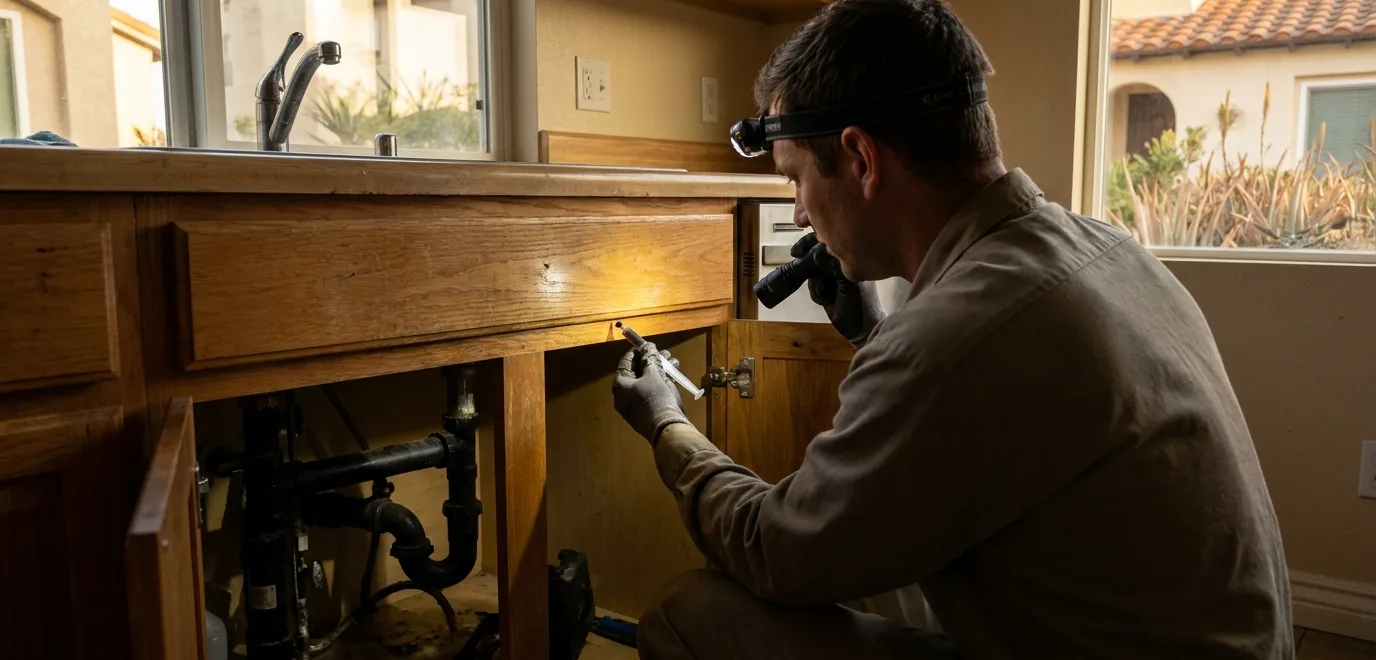
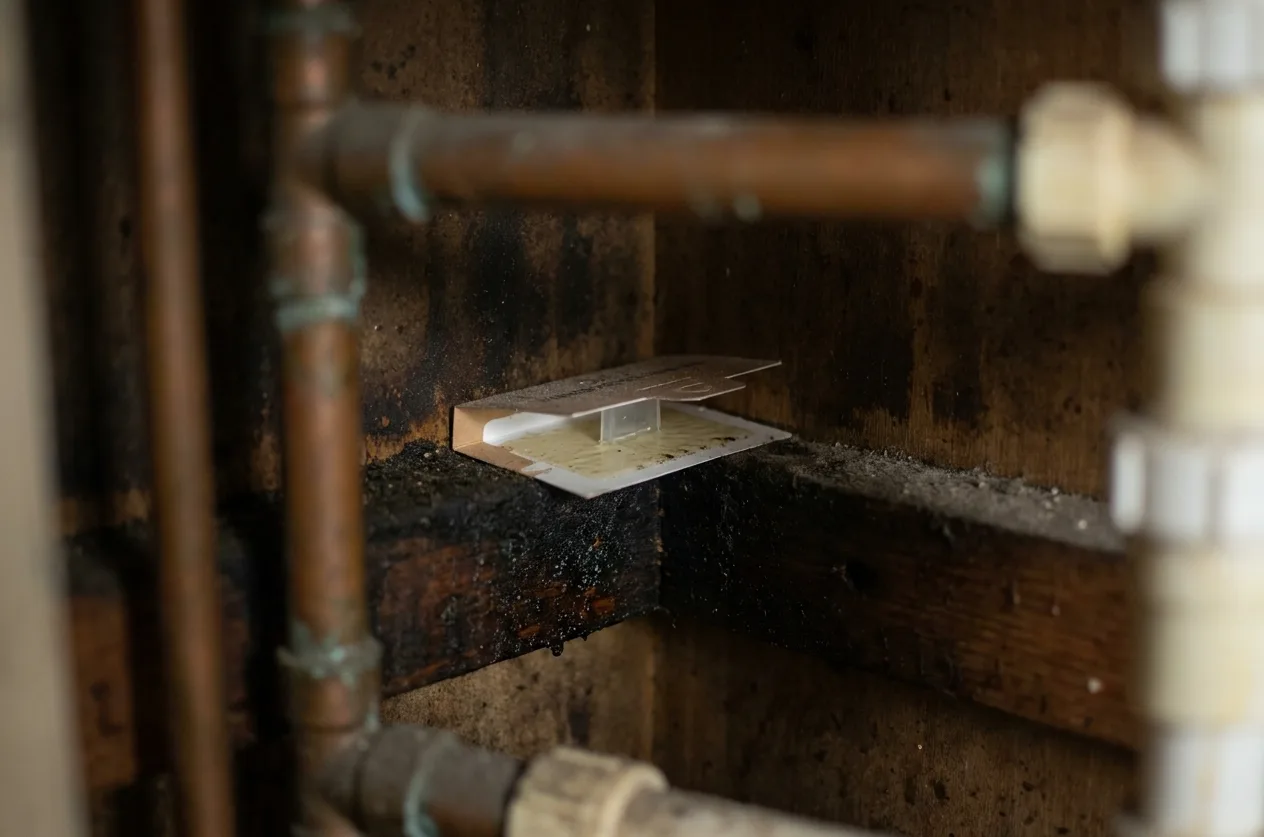
Under and behind appliances, the motor housing of the fridge, under sink cabinets, the hinges and undersides of cabinet doors, around plumbing penetrations, behind wall plates, and in the voids where the counter meets the wall.
Baiting
Gel bait placed in the harbourage areas rather than on open surfaces. Foraging insects feed and return, and the effect carries through the population including nymphs that never leave the void. Placement is most of the skill here — bait in the wrong location is simply ignored.
Growth Regulators
An insect growth regulator stops nymphs maturing into breeding adults. It does not kill quickly, which is exactly the point: it breaks the reproductive cycle so the population cannot rebuild while the bait works through it.
Sealing and Sanitation
We seal the gaps that let them move between voids and rooms — plumbing penetrations, gaps behind cabinets, cracks at the base of walls. We will also tell you plainly which conditions are feeding the problem. That conversation is sometimes uncomfortable, but a drip under a sink or cardboard stored against a warm wall will undo good treatment.
Follow-Up
German cockroach work is not a single visit. Egg cases already in place are largely protected from treatment, so a return visit timed to the hatch is what actually finishes the job.
Signs You Have a Cockroach Problem
Seeing One in Daylight
German cockroaches avoid light and stay hidden when they can. One in the open during the day generally means the harbourage areas are crowded — a sign of an established population, not a stray.
Droppings
Small dark specks resembling ground pepper along cabinet edges, in drawers and behind appliances. Larger species leave droppings closer to a grain of rice.
Egg Cases
Small brown capsules, roughly the shape of a purse, tucked into corners and crevices. Finding these means breeding rather than visiting.
A Musty Odour
An established population produces a distinctive stale, oily smell. It is usually strongest near the harbourage, which makes it useful for locating them.
Smear Marks
Irregular dark smears where surfaces are damp and traffic is heavy — along baseboards, under sinks, around pipe entries.
Health Reasons to Deal With Them Promptly
Cockroaches move between drains, waste and food-preparation surfaces, and they carry the associated bacteria mechanically on their bodies. The more significant issue for most households is allergens: cockroach droppings, shed skins and body fragments are a recognised asthma trigger, and the effect is strongest in children. In apartments with a long-running infestation this is a genuine health concern rather than a marketing line.
Apartments, Rentals and Shared Buildings
In multi-unit buildings, German cockroaches treat the structure as one habitat. Treating a single unit while neighbouring units go untouched tends to move the population sideways for a few weeks. Where a building-wide approach is what is genuinely needed, we will say so rather than sell you a course of visits that cannot succeed on their own.
Keeping Them Out After Treatment
Fix leaks and reduce standing moisture — that matters more than anything in the kitchen cupboard. Store food and pet food in sealed containers, keep the area under and behind appliances clean, and break down and remove cardboard promptly, since corrugated cardboard is close to ideal harbourage and arrives with deliveries. Then keep an eye on the same places we inspected; catching a small population early is a fraction of the work.
★ FAQ
Frequently Asked Questions
German cockroaches are the most frequent indoor species in Chula Vista, particularly in kitchens and bathrooms where they access food and moisture. American cockroaches often enter from sewer systems and outdoor areas. Turkestan cockroaches have become increasingly common in Southern California, establishing outdoor populations in landscaping and irrigation systems before moving indoors. Each species requires specific treatment methods for effective elimination.
Cockroaches don't require filthy conditions—they simply need food, water, and shelter, which exist in every home. Even meticulous housekeeping cannot eliminate microscopic food particles, condensation, and structural gaps that sustain cockroach populations. They often enter through shared walls in multi-unit buildings, grocery bags, used furniture, or plumbing connections. Professional treatment addresses these factors that cleanliness alone cannot control.
German cockroaches reproduce extremely rapidly—a single female produces 30-40 eggs every six weeks, with offspring reaching breeding maturity in just 36 days. Under ideal conditions, one female and her descendants can generate over 10,000 cockroaches within a year. This exponential growth makes early professional intervention critical, as small infestations become severe problems within weeks without proper treatment.
Yes, cockroaches pose significant health risks. They carry bacteria including Salmonella and E. coli, contaminating food preparation surfaces and stored products. Cockroach droppings, shed skins, and saliva contain allergens that trigger asthma attacks and allergic reactions, particularly affecting children. Studies link cockroach exposure to increased asthma severity and emergency room visits in sensitive individuals.
You'll notice reduced cockroach activity within 3-7 days as treatments begin eliminating the population. Complete elimination typically requires 2-3 weeks as baits circulate through the colony and growth regulators prevent reproduction. Severe infestations may need follow-up treatments at 21-30 day intervals. Our treatments provide residual protection for months, preventing reinfestation while the initial population is eliminated.
📍 On the map
Our Complete Cockroach Elimination Process
Systematic methodology ensures total elimination and lasting protection
Our proven 10-step cockroach control process addresses all infestation factors, from identifying species and breeding sites to implementing treatments and preventive measures that keep your Chula Vista property roach-free.