
Silverfish Control in Chula Vista, CA
Protect your home from silverfish damage with expert solutions—request your free inspection today.
- Ants & rodents
- Straightforward pricing
- Local technicians
Call for a rate estimate
- Fast, courteous service
- Clear, upfront pricing
Our local team is taking calls now.





Local Expertise You Can Trust
Our Chula Vista specialists understand Southern California silverfish behavior and provide targeted treatments that work in our unique climate.
Same-Week Service Available
Need silverfish eliminated quickly? We offer expedited scheduling throughout Chula Vista and surrounding San Diego County communities.
Appointments That Fit Your Schedule
Busy week ahead? We coordinate around your availability to provide convenient service times that work for you.
Silverfish Control in Chula Vista
Silverfish are a moisture problem before they are an insect problem. They do not bite, they carry no disease, and they will not damage your building — but they will quietly ruin paper, books, photographs, stored clothing and wallpaper, and they are remarkably persistent once a property suits them. Treating the insects without addressing the humidity that drew them in produces a few quiet weeks and then a return.
They are common across Chula Vista for an obvious reason: coastal humidity. Properties nearer the bay run damper than the eastern hillside communities, and bathrooms, laundry rooms, garages and under-sink cabinets hold moisture regardless of where you are.
What Draws Them In
Humidity
Silverfish thrive in relative humidity above roughly seventy per cent and struggle below fifty. This single factor explains most infestations. Poorly ventilated bathrooms, laundry areas, crawlspaces and garages sit in their preferred range for much of the year here.
Starch and Cellulose
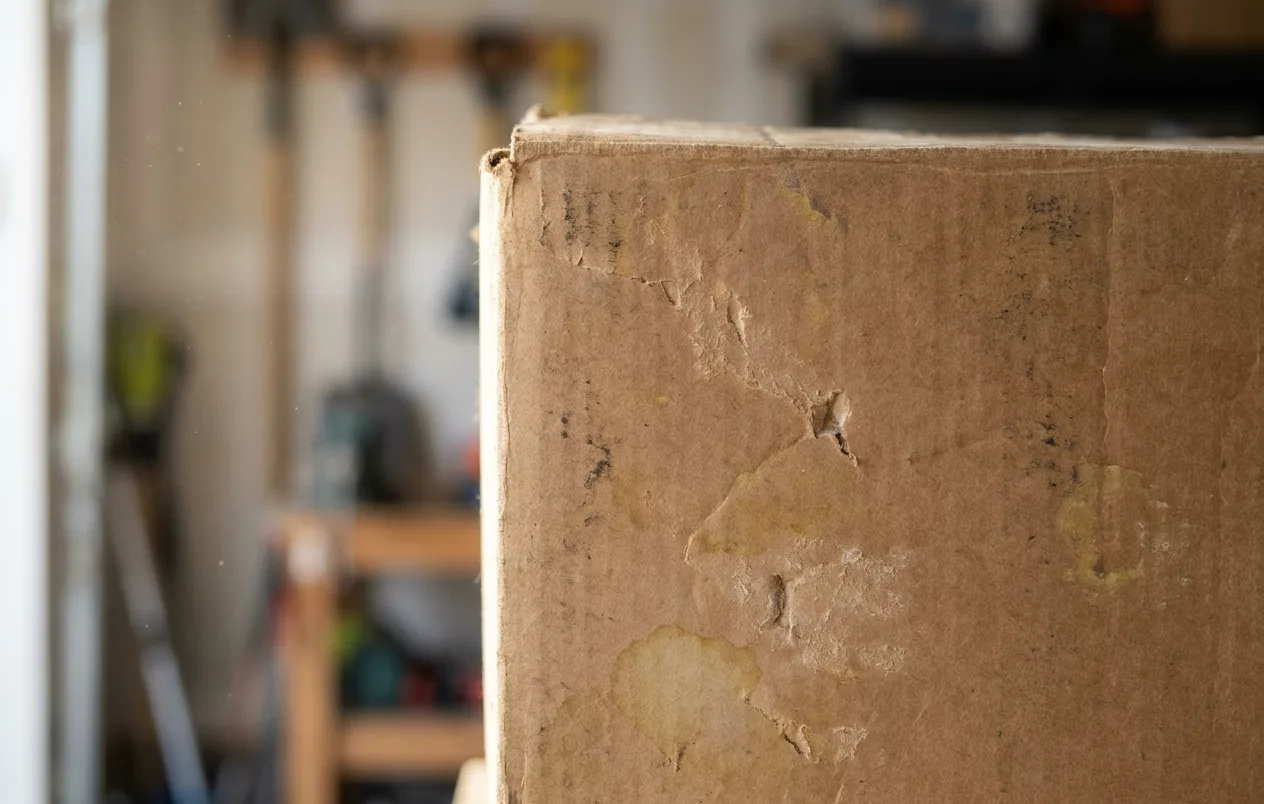
Their diet is unusual and it is what makes them destructive. They feed on starches and polysaccharides — book bindings and glue, paper, cardboard, wallpaper paste, photographs, natural fabrics, and the sizing in stored textiles. A box of documents in a damp garage is close to an ideal habitat.
Undisturbed Storage
They avoid light and traffic, so long-term storage areas are where populations build. Boxes stacked against a garage wall, a linen cupboard rarely opened, the back of a wardrobe.
Our Silverfish Control Process
Inspection
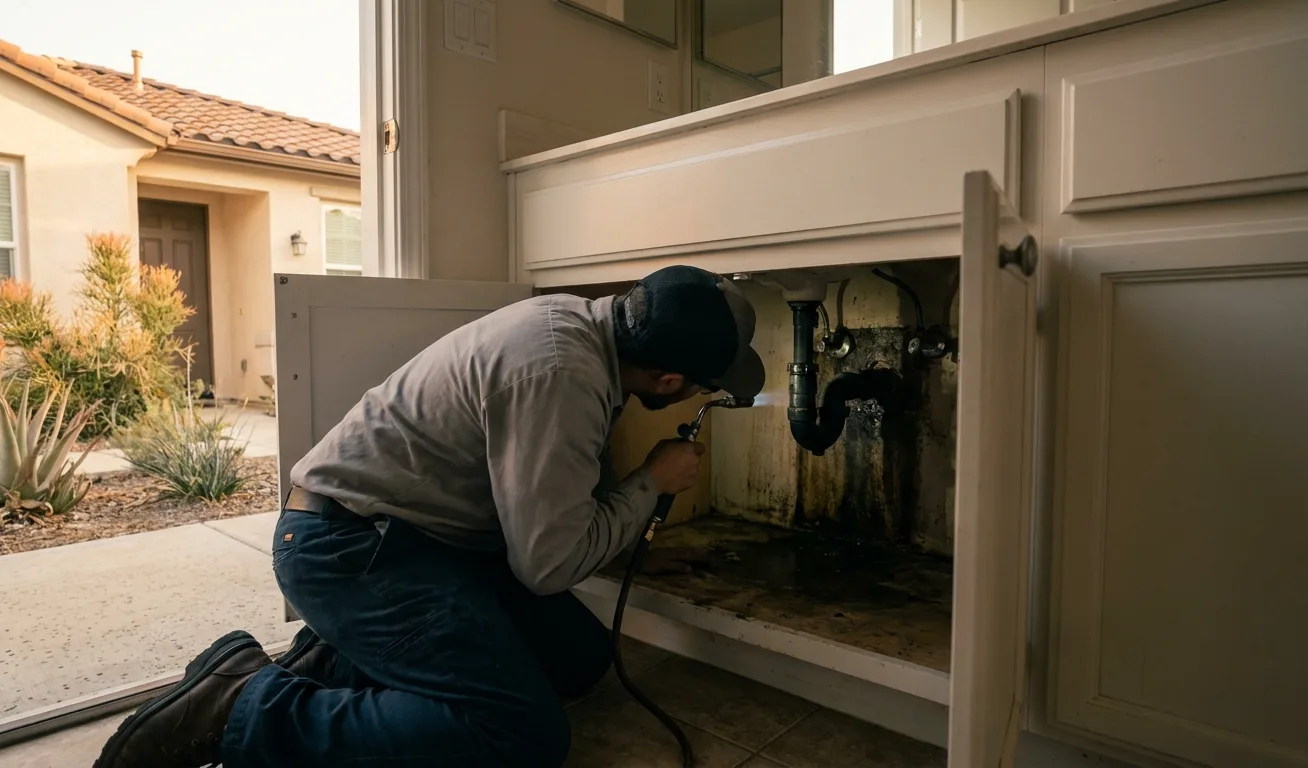
We locate the harbourage and, just as importantly, the moisture source feeding it. That means checking under sinks, behind and beneath the water heater, around the washing machine, in the crawlspace where there is one, and through stored boxes and cupboards.
Reading the Damage
Silverfish leave a distinctive irregular surface grazing rather than clean holes, often with faint yellow staining and fine scale-like debris. That pattern tells us where they have been feeding and roughly how long.
Targeted Treatment
Treatment goes into the cracks, voids and edges where they actually shelter — behind baseboards, under cabinet bases, along the sill plate — rather than across open floors where they simply do not spend time. Where appropriate we use a desiccant dust in voids, which stays effective far longer than a liquid application in dry, undisturbed space.
Moisture Correction
This is the part that determines whether the result lasts. We identify what is holding the humidity up and tell you specifically what to change — an extractor fan that is not running long enough, a slow leak under a sink, an unvented crawlspace, condensation on cold-water pipes, cardboard stored directly on a concrete slab.
Follow-Up
Silverfish develop slowly and can live a surprisingly long time, so populations decline gradually rather than collapsing. We schedule a follow-up to confirm the trend rather than declaring victory on the day.
Signs You Have Silverfish
The Insects Themselves
Teardrop-shaped, silvery-grey, roughly half an inch, with three tail filaments and a distinctive wriggling movement. Usually seen when a light is switched on in a bathroom at night, or when a stored box is moved.
Irregular Grazing on Paper or Fabric
Surface feeding that thins the material rather than punching through it cleanly. On book pages it shows along the edges; on wallpaper it appears where the paste is.
Yellow Staining
Faint yellowish marks on paper and stored textiles, often the first thing noticed on linens that have been packed away.
Shed Skins
Silverfish moult throughout their lives, unusually for an insect, so pale discarded casings accumulate wherever a population is established.
Small Black Specks
Droppings resembling coarse pepper in the corners of drawers, cupboards and storage boxes.
What Silverfish Actually Damage
Books and documents, photographs, wallpaper, stored natural-fibre clothing and linens, cardboard packaging, and occasionally dry pantry goods. Where people notice it most is in things that cannot be replaced — a box of family photographs, certificates, or a stored quilt. None of it is structural, but it is often the sort of loss that matters more than the cost of treatment.
Keeping Them From Coming Back
Ventilate bathrooms properly and run the fan for longer than feels necessary — fifteen or twenty minutes after a shower rather than switching it off with the light. Fix drips and insulate sweating pipes. Move long-term storage out of cardboard and into sealed plastic bins, and lift boxes off concrete floors onto shelving or pallets, since a slab wicks moisture upward.
Where a property runs persistently damp, a dehumidifier in the affected space does more than any repeat treatment will. Get the humidity down and the silverfish problem largely resolves itself; leave it up and no amount of spraying will hold.
If you are finding them regularly and cannot work out where they are coming from, that is worth a look. The moisture source is often somewhere unexpected, and finding it is usually the whole job.
★ FAQ
Frequently Asked Questions
Silverfish seek moisture, food sources, and shelter—all readily available in Southern California homes. Our coastal proximity creates humidity levels silverfish prefer, particularly in bathrooms, laundry rooms, and areas with plumbing. They feed on starches and carbohydrates found in paper, books, photographs, wallpaper paste, and fabric sizing. Cracks in foundations, gaps around utility lines, and openings beneath doors provide entry points from exterior populations seeking favorable indoor conditions.
Occasional silverfish sightings—one or two insects over several months—suggest minimal activity, while frequent encounters indicate established populations. Additional signs include yellow stains on paper or fabric, small holes in books or wallpaper, pepper-like fecal droppings in cabinets or storage areas, and shed skins in undisturbed spaces. Finding silverfish during daytime hours suggests significant populations, as these nocturnal insects normally avoid light.
Silverfish populations rarely resolve without intervention because Chula Vista's climate provides year-round favorable conditions. These insects reproduce continuously, with females laying eggs throughout their multi-year lifespan. Without addressing moisture sources and applying professional treatments, silverfish populations typically expand over time, spreading to additional areas and causing increasing damage to stored items and household materials.
Silverfish don't bite, sting, or transmit diseases to humans or pets. Their threat is entirely property-related—they damage books, photographs, important documents, wallpaper, clothing, and stored items through their feeding activity. Some people experience allergic reactions to silverfish scales and droppings, though this is relatively uncommon. The primary concern remains protecting valuable belongings from ongoing damage.
Most homeowners notice significant reduction in silverfish activity within two to three weeks following initial treatment, though complete elimination typically requires four to six weeks as silverfish contact treated surfaces. Severe infestations or homes with significant moisture issues may require follow-up treatments for complete control. Our service includes monitoring and follow-up visits to ensure silverfish populations are fully eliminated and don't reestablish.
📍 On the map
Our Systematic Silverfish Elimination Approach
Proven methodology ensures complete elimination and lasting protection
Our comprehensive silverfish control process addresses all contributing factors—from existing populations to moisture sources and entry points—ensuring complete elimination throughout your Chula Vista home.