
Flea Control in Chula Vista, CA
Get your free inspection and customized treatment plan today—no obligation required.
- Ants & rodents
- Straightforward pricing
- Local technicians
Call for a rate estimate
- Fast, courteous service
- Clear, upfront pricing
Our local team is taking calls now.





Emergency Response Available
Dealing with a sudden flea outbreak in Chula Vista? We understand the urgency and offer rapid response scheduling to address your flea problem quickly.
Experienced Local Technicians
Our certified flea control specialists know Chula Vista homes inside and out, delivering effective treatments backed by years of local experience.
Convenient Scheduling
Busy schedule? We'll find a time that works for you. Our team accommodates early mornings, evenings, and weekend appointments throughout Chula Vista.
Flea Control in Chula Vista
Fleas are a maths problem. The adults you see on a pet are a small fraction of the population — the overwhelming majority of any infestation exists as eggs, larvae and pupae in carpet fibres, bedding, upholstery and the gaps between floorboards. Treating the animal alone deals with the visible part and leaves the reservoir intact, which is why so many households treat repeatedly and feel like they are getting nowhere.
Our mild climate removes the seasonal break that keeps flea populations down elsewhere. In Chula Vista fleas are effectively a year-round problem, and indoor populations can persist through winter without difficulty.
Why the Life Cycle Is the Whole Story
A female flea lays eggs on the animal; the eggs are not sticky and fall off wherever the pet goes — beds, sofas, the route between the back door and its favourite spot. Those hatch into larvae that move away from light down into carpet pile and cracks, feed on organic debris, then spin cocoons.
The Pupal Stage Is the Difficult Part
Inside the cocoon the flea is well protected and largely untouched by insecticide. It can wait there for weeks, emerging in response to vibration, warmth and carbon dioxide — the signals of a host arriving. This is why people return from holiday to a sudden surge of fleas in an apparently empty house, and why a single treatment never finishes the job. Any credible flea programme accounts for emergence after the first visit.
Our Flea Treatment Process
Inspection
We identify where the animals spend their time, because that is where the population is concentrated: pet beds, favoured furniture, the base of curtains, the transition strips between rooms, and any accessible crawlspace or subfloor. We also check the exterior — shaded, sheltered ground where a pet lies is often the outdoor source.
Preparation You Do First
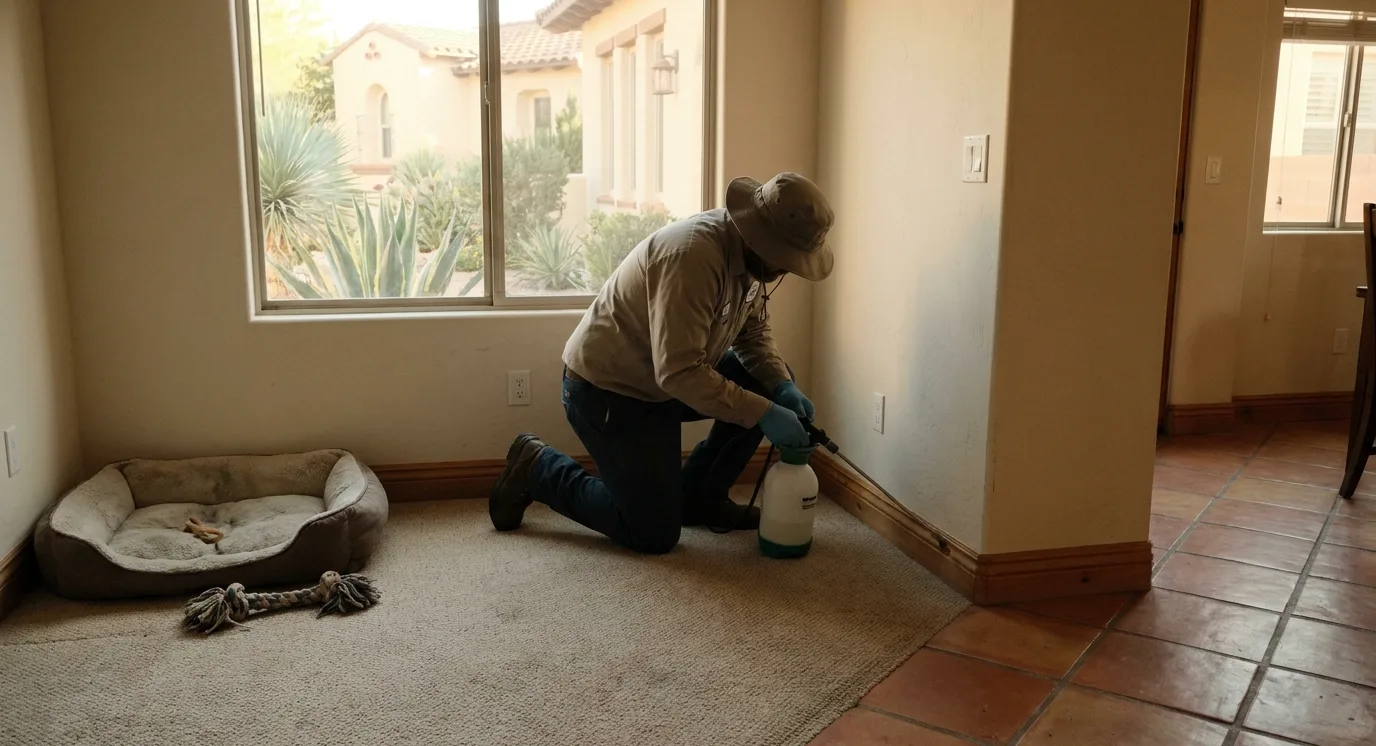
Preparation genuinely changes the result here. Vacuum thoroughly before we arrive, including under furniture and along skirting boards, and dispose of the bag or empty the canister outside. Vacuuming physically removes eggs and larvae, and the vibration triggers pupae to emerge — which is exactly what you want, because emerged adults are treatable. Launder pet bedding on the hottest cycle the fabric allows.
Treatment
Adulticide Plus Growth Regulator
We combine a product for the adults with an insect growth regulator that prevents eggs and larvae developing into breeding adults. The growth regulator is what breaks the cycle; without it you are only ever removing the current generation.
Where It Goes
Along skirting boards, into carpet edges and pile, under and around furniture, and into the rest areas rather than broadcast across open floor. Hard floors need attention at the edges and in the seams, which is where larvae shelter.
Exterior Treatment Where It Applies
Fleas outdoors survive in shaded, humid ground — under decking, in dense planting, beneath shrubs where a dog lies. Open sunny lawn is largely self-limiting. We treat the sheltered areas rather than the whole yard.
Follow-Up
A return visit is scheduled to deal with the adults that emerge from pupae after the first treatment. Expect to still see some fleas in the days after treatment — that is emergence, and it is the process working rather than failing.
Your Vet Handles the Animal
We treat the property; your veterinarian treats your pet, and both have to happen or the cycle simply restarts. Modern prescription flea preventatives are far more effective than most retail options, and your vet can advise on what suits the animal's age, weight and health. We would rather say that plainly than pretend property treatment alone is sufficient.
Signs of a Flea Problem
Scratching and Grooming
Persistent scratching, biting at the base of the tail, or over-grooming, often before you see a single flea.
Flea Dirt
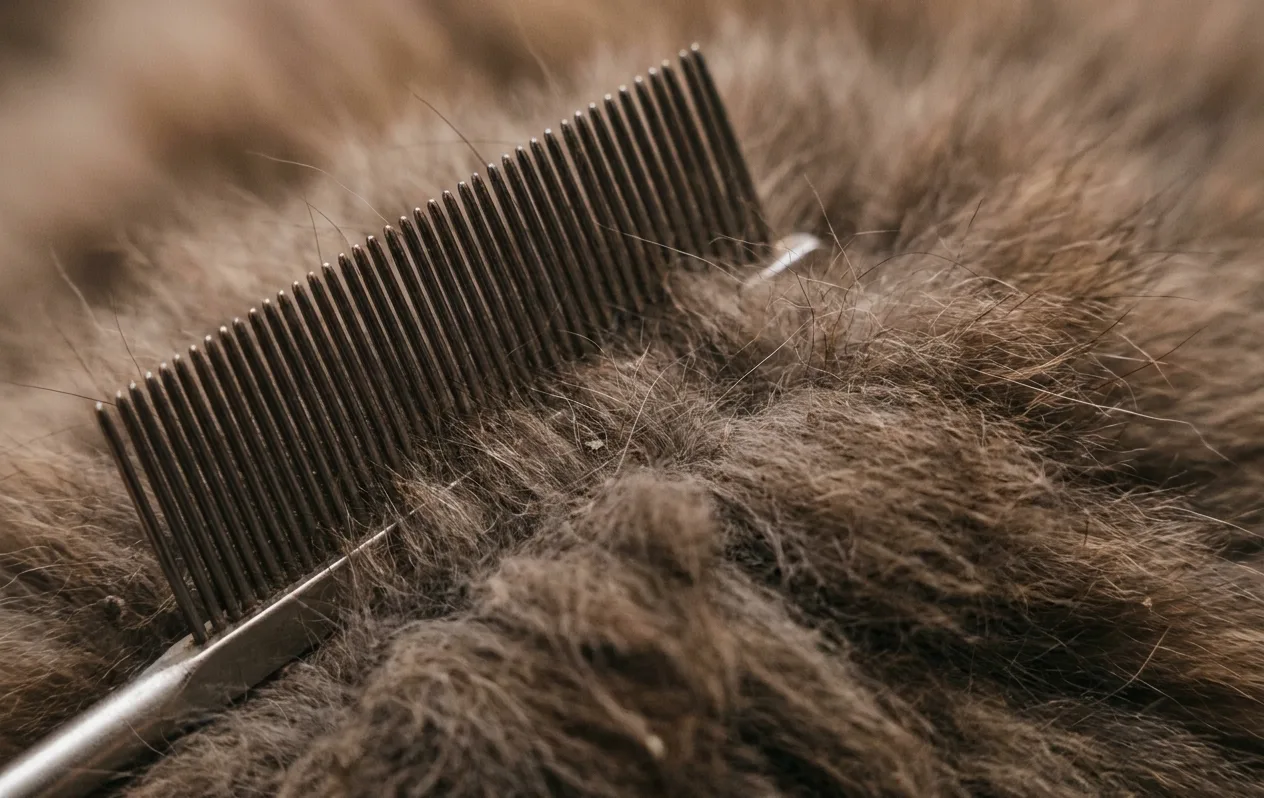
Fine dark specks in the coat, most easily found with a flea comb along the back and tail base. Placed on damp white paper it dissolves rust-red, since it is digested blood — that is the confirmation test.
Bites Around Ankles
Small itchy bites on the lower legs, typically clustered. Fleas jump from floor level, which is why the pattern sits low.
Fleas Visible on Light Flooring
Small dark fast-moving specks on tile or light carpet, especially in the pet's usual spots.
A Surge After Time Away
Returning from a trip to sudden heavy activity is characteristic — the pupae waited for a host and emerged together.
Fleas Without a Pet
It happens, and it usually traces to one of three things: a previous occupant's animals, wildlife nesting in a crawlspace, attic or under decking, or rodents in the structure. If there is no pet in the household we look for the animal that is actually hosting them, because treating the interior without removing that source will not hold.
Keeping Them From Coming Back
Keep your pet on a year-round veterinary preventative — in this climate the seasonal approach does not work. Vacuum regularly and thoroughly, particularly the pet's areas, and empty it outside. Wash pet bedding often and hot. Keep grass trimmed and cut back dense shaded planting where animals rest. Close off crawlspace and deck access so wildlife cannot nest underneath.
If you are treating repeatedly and the problem keeps returning, the reservoir is somewhere you have not reached. That is worth a proper look rather than another round of the same product.
★ FAQ
Frequently Asked Questions
Most flea infestations require 2-3 treatments spaced 10-14 days apart for complete elimination. You'll notice significant reduction in adult flea activity within 24-48 hours after initial treatment, but eggs and pupae already present require additional applications as they develop. Chula Vista's warm climate can accelerate flea development, making professional treatment timing critical for breaking the reproductive cycle completely.
Seeing fleas after treatment is normal and actually indicates the treatment is working. Flea pupae are resistant to pesticides and can remain dormant in cocoons for weeks or months. Vibrations from walking and carbon dioxide from breathing trigger emergence, causing treated pupae to hatch into adults that quickly die after contacting treatment residue. This post-treatment activity typically lasts 7-14 days before complete elimination occurs.
Yes, fleas can establish in pet-free homes through several pathways. Previous occupants may have had pets that left behind flea populations in carpeting and flooring. Wildlife including raccoons, opossums, and rodents can introduce fleas into attics, crawl spaces, and yards. Visiting pets or even your own clothing after contact with infested areas can transport fleas inside, where they'll bite humans when preferred animal hosts aren't available.
Proper preparation maximizes treatment effectiveness and safety. Vacuum all carpeted areas, furniture, and baseboards thoroughly, then immediately dispose of vacuum bags or empty canisters outside. Wash all pet bedding, removable furniture covers, and floor-level items in hot water. Remove pets, their food bowls, and toys during treatment. Clear floor areas to allow access under furniture and into corners where fleas concentrate.
Professional flea treatments use EPA-registered products applied according to strict safety guidelines that protect families and pets. We require temporary removal of people and pets during application, with re-entry permitted once treated surfaces dry completely—typically 2-4 hours. Modern flea control products target insect-specific biological systems, providing effective elimination with appropriate safety margins for mammals when used properly by licensed professionals.
Chula Vista's Mediterranean climate with mild winters and warm temperatures year-round allows continuous flea breeding without the natural population control that freezing temperatures provide in colder regions. Outdoor temperatures rarely drop low enough to kill flea larvae and pupae, while indoor heating maintains ideal development conditions during cooler months. This means Chula Vista homeowners face persistent flea pressure requiring year-round prevention rather than seasonal treatment.
Indoor treatments focus on carpets, furniture, pet bedding, and floor cracks where flea eggs and larvae develop in protected environments. We use growth regulators and residual products that continue working for weeks. Outdoor treatments target yards, landscaping, and shaded areas where fleas breed in soil and vegetation, creating barriers that prevent migration indoors. Complete flea elimination requires coordinated indoor and outdoor treatment since populations in either location can reinfest the other.
While treating only affected rooms may seem cost-effective, fleas spread throughout homes as pets move between areas and eggs fall into multiple locations. Adult fleas travel seeking blood meals, while eggs and larvae develop wherever they land. Partial treatments leave untreated populations that quickly reinfest treated areas, wasting money on repeated applications. Whole-house treatment eliminates all flea populations simultaneously, preventing reinfestation and providing faster, more cost-effective results.
Flea bites typically appear as small red bumps clustered around ankles and lower legs where fleas jump from floors onto people. You may see tiny dark specks (flea dirt) on pet bedding that turn red when moistened—this is digested blood. Fleas themselves appear as tiny dark brown insects that jump rapidly when disturbed. Professional inspection can definitively identify fleas versus bed bugs, mosquitoes, or other biting pests that require different treatment approaches.
Effective flea prevention combines regular pet treatments using veterinarian-recommended products, consistent vacuuming to remove eggs before they develop, and prompt treatment of any new flea activity. Maintain yard areas by mowing regularly, removing debris, and managing wildlife access
📍 On the map
Our Systematic Flea Elimination Process
Proven methodology ensures complete flea removal and lasting protection
Our comprehensive flea control process targets all life stages and breeding areas, eliminating current infestations while preventing future outbreaks in your Chula Vista home.