
Termite Treatment in Chula Vista, CA
Protect your property with expert termite solutions—request your free inspection today.
- Ants & rodents
- Straightforward pricing
- Local technicians
Call for a rate estimate
- Fast, courteous service
- Clear, upfront pricing
Our local team is taking calls now.





Local Termite Specialists
Our Chula Vista team knows local termite species and construction methods, delivering treatments proven effective in San Diego County homes.
Advanced Detection Technology
We use thermal imaging and moisture meters to find hidden termite activity other inspectors miss, ensuring complete protection for your property.
Licensed & Insured Professionals
Every technician carries California Structural Pest Control Board certification and comprehensive insurance for your complete peace of mind.
Termite Treatment in Chula Vista
Termites are the pest that costs the most and announces itself the least. They work inside timber, away from light, and by the time damage is visible from a living room the colony has usually been active for years. Southern California has both of the species that matter to homeowners, and Chula Vista's building stock — a lot of stucco over wood framing, much of it on slab — gives both of them what they need.
The good news is that termites move slowly. A property inspected on a sensible cycle rarely turns into a structural problem. The properties that do are almost always ones nobody has looked at in a decade.
The Two Species Here, and Why the Difference Matters
Subterranean Termites
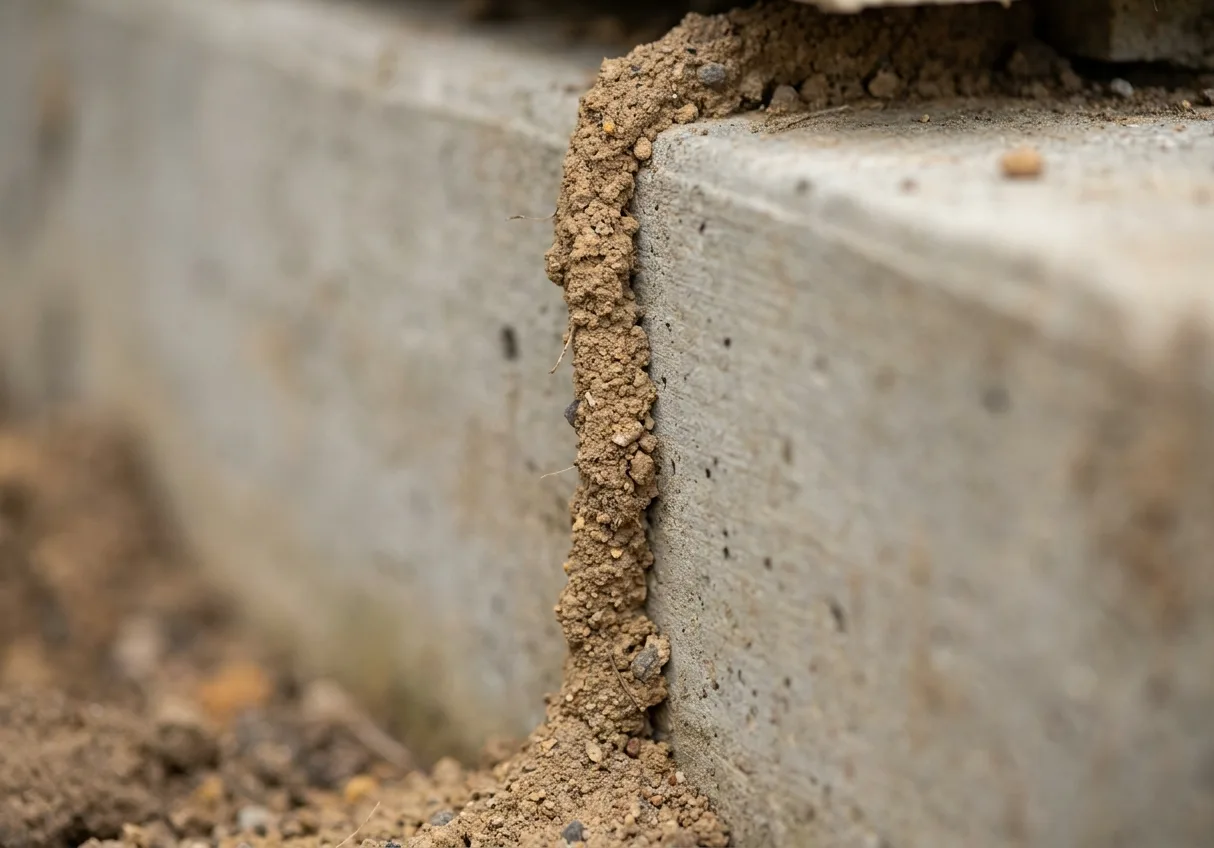
These live in the soil and need constant moisture, so they build shelter tubes to travel between the ground and the timber they are eating. Those mud tubes — pencil-width earthen tracks running up a foundation, stem wall or pier — are the single most reliable sign and often the only visible one. They cause the majority of serious structural damage in California.
Drywood Termites
These live entirely inside the wood with no soil contact at all, which makes them a different problem. They colonise attic framing, roof eaves, fascia, window and door frames, and furniture. Because they need no ground connection, a soil treatment does nothing to them. They are extremely common in coastal Southern California and are what we most often find in older Chula Vista homes.
The distinction drives everything. Treating a drywood infestation with a subterranean approach is wasted money, and vice versa — which is why an inspection that identifies the species is not an upsell, it is the job.
Our Termite Inspection and Treatment Process
Inspection
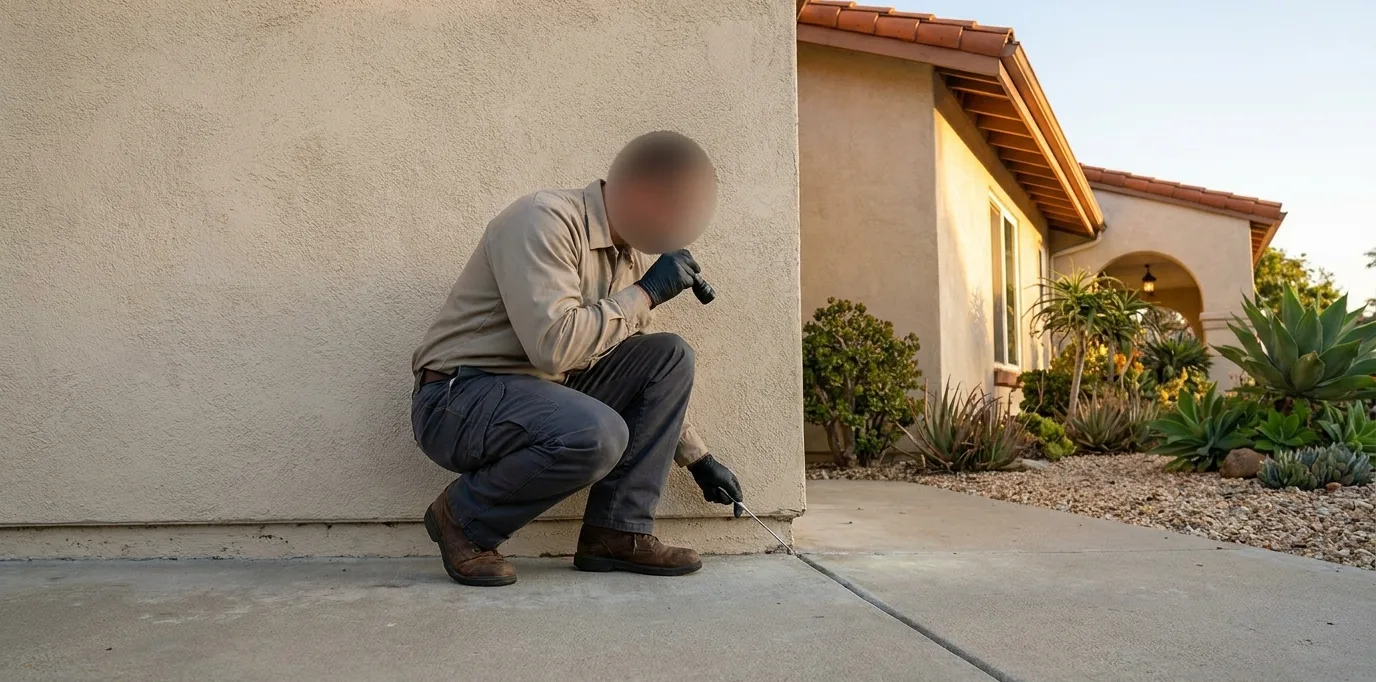
We work the exterior foundation line, stem walls, any crawlspace, the garage, the attic where accessible, and the interior around windows, door frames and baseboards. We sound timber where there is reason to and look for the specific evidence each species leaves.
What Points to Subterranean Activity
Mud tubes on foundations and piers, damaged wood that follows the grain and is packed with soil, and swarmers or discarded wings near windows in spring.
What Points to Drywood Activity
Small round kick-out holes and neat piles of hard, six-sided faecal pellets resembling coarse sand or coffee grounds, typically on window sills, in the garage, or on the floor beneath eaves and attic framing.
Treatment for Subterranean Termites
Liquid Soil Treatment
A treated zone established in the soil around and beneath the structure. Modern non-repellent products are not detected by the termites, so they pass through, pick it up and carry it back into the colony rather than avoiding the treated ground.
Baiting Systems
In-ground stations placed around the property and monitored. Slower to act than a liquid treatment but useful where soil treatment is impractical, where you want ongoing monitoring, or where the intent is to eliminate a colony rather than exclude it from one building.
Treatment for Drywood Termites
Localised Treatment
Where the infestation is confined and accessible, treating the affected members directly is appropriate and far less disruptive than whole-structure work.
Whole-Structure Treatment
Where drywood colonies are widespread or inaccessible — typically through attic framing — a structural approach is the only thing that reaches all of it. We will tell you honestly which situation you are in, including when localised work is genuinely sufficient.
Follow-Up and Monitoring
Termite work is verified over time rather than on the day. We schedule follow-up inspection so activity is confirmed as stopped, and we recommend a regular inspection cycle afterwards.
Signs You May Have Termites
Mud Tubes on Foundations
Earthen tubes on a stem wall, pier or foundation face. Break a section open — if it is repaired within a few days, the tube is active.
Pellet Piles
Small heaps of hard granular pellets below a window sill, in a garage corner or on an attic floor, often reappearing after being swept up. This is drywood frass and is close to diagnostic.
Swarmers and Discarded Wings
Winged reproductives emerging indoors, or piles of equal-length shed wings on sills and in cobwebs. Swarming means a mature colony, and one indoors means it is inside your structure rather than nearby.
Hollow or Blistered Timber
Wood that sounds hollow when tapped, or paint that looks blistered or rippled over a flat surface. Termites eat from the inside and leave a thin outer shell.
Sticking Doors and Windows
Frames that have begun to bind without a change in weather can indicate damage distorting the timber.
Damaged Wood That Follows the Grain
Galleries running with the grain, soil-packed in subterranean cases and smooth-walled in drywood ones.
Buying or Selling a Home
A wood-destroying pest inspection is a routine part of most Southern California property transactions, and lenders frequently require one. Getting an inspection before you list rather than during escrow gives you time to deal with anything found instead of negotiating under deadline. We provide written reports suitable for a transaction.
Reducing the Risk
Keep soil and mulch well below the level of any wooden siding or stucco weep screed. Move firewood, lumber and cardboard off the ground and away from the house. Fix leaks and correct drainage so water runs away from the foundation rather than pooling against it. Keep crawlspace vents clear so the space stays dry. Trim vegetation off the walls, and keep an eye on any wood in direct ground contact — fence posts, deck footings, planter boxes against the house.
Most importantly, have the property looked at periodically rather than waiting for a sign. Termite damage is slow and cumulative, which means an inspection cycle is genuinely the cheapest thing on this page.
★ FAQ
Frequently Asked Questions
Common termite warning signs include mud tubes on foundation walls, discarded swarmer wings near windows, hollow-sounding wood, small piles of pellets beneath wood, and visible wood damage. However, termites often remain hidden for years before obvious signs appear. Professional inspection using thermal imaging and moisture meters detects infestations before visible damage occurs, protecting your investment through early intervention.
Subterranean termites live in underground colonies and build mud tubes to access above-ground wood while maintaining necessary moisture. They cause the most widespread damage in Chula Vista. Drywood termites live entirely within the wood they consume, require no soil contact, and leave distinctive fecal pellets. Each species requires different treatment approaches—subterranean termites need soil treatments or baiting systems, while drywood termites may need localized treatments or fumigation.
Liquid termiticide treatments begin working immediately, creating protective barriers that eliminate termites within weeks as they contact treated zones. Baiting systems typically achieve colony elimination within 2-6 months as termites consume and share bait throughout the colony. Fumigation eliminates drywood termites within 24-72 hours. Treatment timelines vary based on infestation severity, termite species, and chosen treatment method.
Modern termite treatments use products specifically designed for structural pest control with excellent safety profiles when applied by licensed professionals. Liquid termiticides are applied to soil and inaccessible areas, not living spaces. Baiting systems use enclosed stations with minimal environmental exposure. We follow strict California regulations and provide detailed safety information for each treatment method, including any necessary precautions during application.
Insurance policies typically exclude termite damage because it's considered preventable through regular maintenance and inspection rather than a sudden, unexpected event. Termite damage develops gradually over months or years, making it a homeowner maintenance responsibility similar to roof upkeep or plumbing maintenance. This makes preventive termite inspections and prompt treatment financially important for protecting your property investment.
Annual termite inspections provide the best protection for Chula Vista properties, detecting new activity before significant damage occurs. Homes with previous termite history, moisture problems, or wood-to-soil contact may benefit from more frequent inspections. Real estate transactions typically require termite inspections regardless of the last inspection date. Regular inspections cost far less than repairing undetected termite damage.
DIY termite treatments rarely achieve complete colony elimination because they don't address the entire infestation or create comprehensive protective barriers. Subterranean termite colonies contain hundreds of thousands of individuals spread across large areas that surface treatments cannot reach. Professional treatments use specialized products unavailable to consumers, require proper application equipment, and include warranties that DIY approaches cannot provide. Inadequate treatment allows damage to continue while creating a false sense of security.
Effective termite prevention includes eliminating moisture problems through proper drainage and ventilation, removing wood-to-soil contact around foundations, storing firewood away from structures, fixing plumbing leaks promptly, maintaining gutters and downspouts, and removing cellulose debris like cardboard and lumber from near your home. These measures reduce termite attractants, but professional treatment provides the most reliable protection given Chula Vista's year-round termite pressure and favorable climate conditions.
📍 On the map
Our Complete Termite Elimination Process
Systematic approach ensures total colony elimination and future protection
Our thorough termite control process combines advanced inspection technology, proven treatment methods, and preventive strategies to protect your Chula Vista home from ongoing termite threats.