
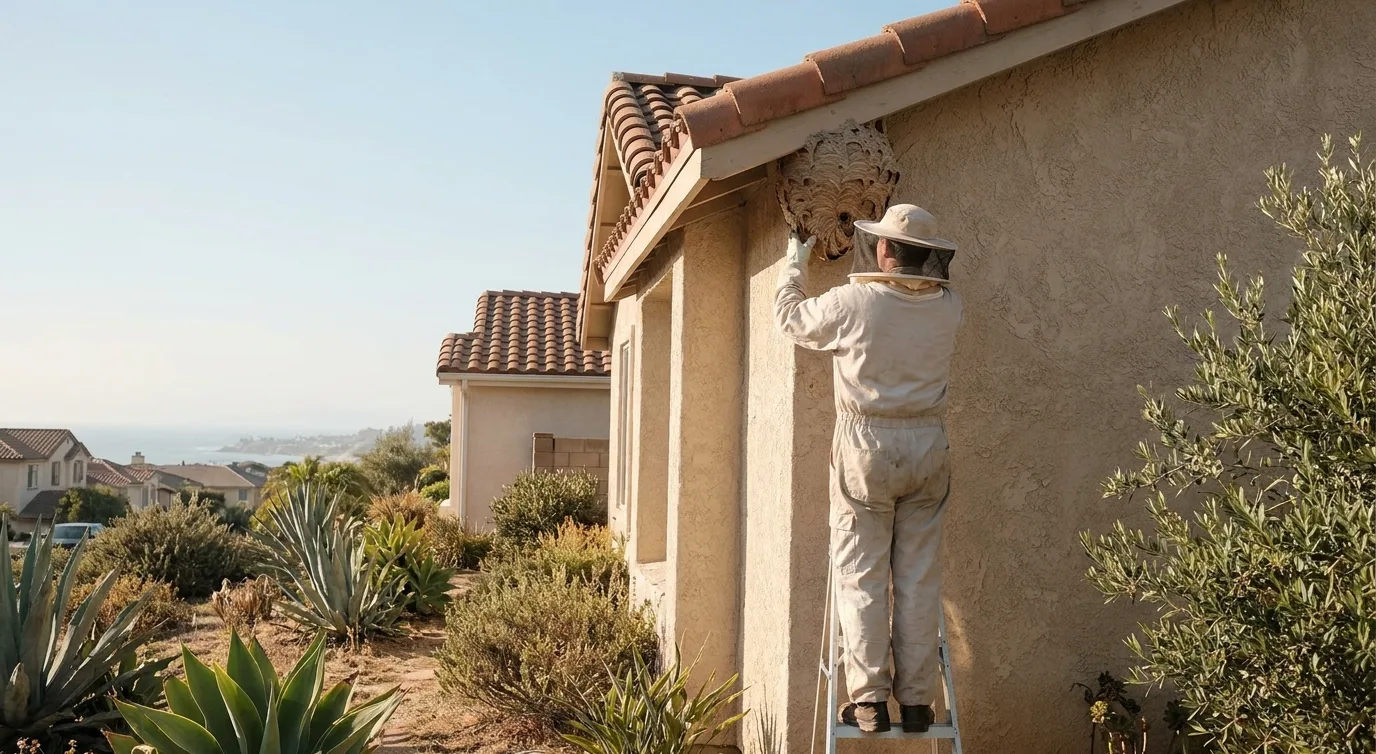
Bee And Wasp Removal in Chula Vista, CA
Reach out today for your free, no-obligation estimate on safe stinging insect removal.
- Ants & rodents
- Straightforward pricing
- Local technicians
Call for a rate estimate
- Fast, courteous service
- Clear, upfront pricing
Our local team is taking calls now.





Licensed Removal Experts
Our certified technicians safely eliminate bee and wasp colonies from Chula Vista properties using proven methods that protect your family and property.
Same-Day Response Available
Dealing with aggressive wasps or bees near your home? We offer rapid response services throughout Chula Vista to address urgent stinging insect situations.
Eco-Conscious Solutions
We prioritize environmentally responsible removal techniques, including live bee relocation when possible, to protect California's important pollinator populations.
Bee and Wasp Removal in Chula Vista
Stinging insects are the one category where we ask people not to attempt it themselves. Not because the products are complicated, but because a disturbed colony defends itself, and the failure mode is a person on a ladder being stung repeatedly. Almost every serious sting incident we hear about follows the same story: someone sprayed a nest in daylight, from below, without a way to retreat.
We handle wasps, yellowjackets, paper wasps, hornets and honey bee situations across Chula Vista. What we do differs sharply depending on which one you have — and with honey bees, the right answer is often not extermination at all.
Honey Bees Are a Different Conversation
If you have honey bees, we will tell you so and talk about removal rather than treatment wherever it is practical. Honey bees are agriculturally important and killing a colony inside a wall creates a second problem: abandoned comb and honey left in a cavity melts, stains through drywall, ferments, and attracts ants, rodents and wax moths for months afterwards.
Where a colony is established in a structure, the work involves opening the cavity, removing the bees and all of the comb, and sealing the void so the pheromone traces do not draw a new swarm to the same spot. That is carpentry as much as pest control, and we will be straight with you about what it involves before starting.
A Swarm Is Not an Infestation
A football-sized cluster of bees hanging on a branch or fence is a swarm in transit. They are usually docile, have no comb or brood to defend, and typically move on within a day or two on their own. That situation calls for a beekeeper, not an exterminator, and we would rather point you to one than sell you a treatment you do not need.
Wasps and Yellowjackets
Paper Wasps
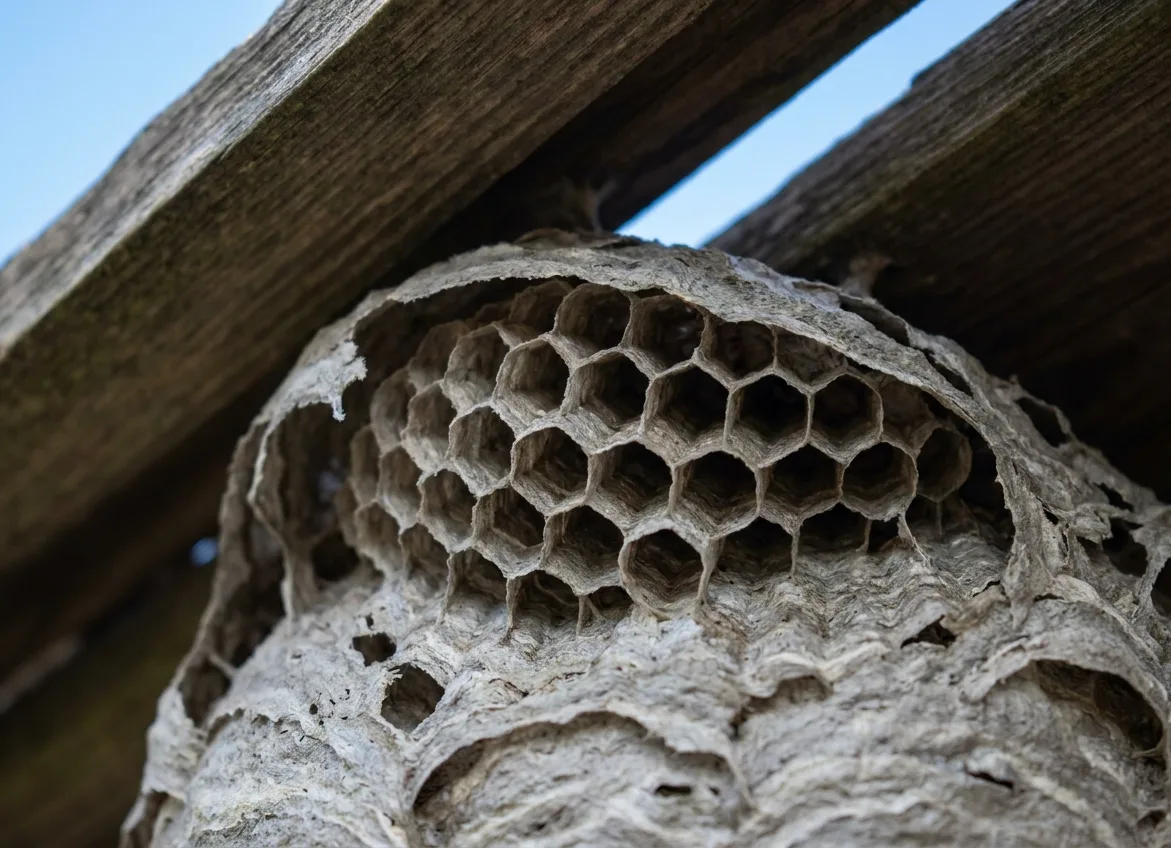
The open, upside-down umbrella nests under eaves, in patio covers, inside barbecue lids and letterboxes. Colonies stay relatively small and the wasps are not especially aggressive away from the nest, but they defend it firmly. These are the most common call we get.
Yellowjackets
The genuinely difficult ones. They nest in cavities — in the ground, in wall voids, under decking, in irrigation boxes — so the nest itself is usually hidden and only the traffic gives it away. Colonies get large by late summer, they are aggressive near the entrance, and each insect can sting repeatedly. A ground nest hit by a lawnmower is how most multiple-sting incidents happen.
Mud Daubers
Solitary, largely harmless, and building the small tubular mud cells you find on walls and under eaves. They rarely warrant treatment, and we will say so.
Our Removal Process
Identification and Locating the Nest
We establish the species and find the actual nest, which for cavity nesters means watching flight lines rather than guessing. Treating the entrance of the wrong void achieves nothing and can drive a wall-void colony inward into the house.
Timing
We work at dusk or early morning where practical. The full colony is home and activity is at its lowest, which makes the treatment more complete and considerably safer than a midday application.
Treatment and Nest Removal
Direct treatment into the nest or void with proper protective equipment and a planned exit. Where the nest is accessible we remove the physical structure afterwards, since an abandoned paper nest left in place attracts secondary pests and gives the site an established look for next season.
Sealing the Entry
For void and ground nests, the entry point gets closed once the colony is dealt with — but only once, and not before. Sealing an active colony's entrance forces them to chew a new exit, and in a wall void that new exit is often on the interior side.
Signs You Have a Nest
Consistent Traffic to One Point
Wasps repeatedly entering and leaving the same gap in a wall, soffit, vent or hole in the ground. That is a nest, whether or not you can see it.
A Visible Paper Nest
Under eaves, in a patio cover, inside a rarely-opened barbecue, shed or letterbox. Check these before reaching in — that is the classic sting scenario.
Increasing Activity Through Summer
Yellowjacket colonies build through the season and peak in late summer and autumn. What was a few insects in June is a serious colony by September.
Sound Inside a Wall
A faint rustling or buzzing from a wall cavity, sometimes with a damp patch or staining appearing on the interior surface, points to an established colony in the void.
Wasps Around Food and Bins
Late-season yellowjackets shift toward sugars and protein and become aggressive around outdoor eating and rubbish. That usually means a nest within a short distance.
Why Not to Do This Yourself
Retail aerosols have limited range and rarely reach the whole nest, which leaves an agitated colony and a person standing below it. Ladders make this considerably worse, and a fall is a more common injury here than the stings. Ground and void nests are the real hazard, since you cannot see how large the colony is until it is already responding.
If anyone in the household has a known sting allergy, treat any nest on the property as a job to hand over rather than a Saturday task.
Reducing the Chance of a Nest
Check eaves, patio covers, barbecue lids, letterboxes and sheds in early spring, when nests are small and founding queens are easy to discourage. Seal gaps in soffits, vents and wall penetrations. Keep bins closed and clear fallen fruit, which is a major late-season attractant. Fill abandoned rodent burrows, since yellowjackets readily take them over.
If you have found a nest and are not sure what it is, send us a description of where it is and what the insects look like before you go near it. It costs nothing to ask, and it is a much better outcome than the alternative.
★ FAQ
Frequently Asked Questions
Africanized bees are present throughout San Diego County and look identical to European honeybees—only genetic testing or behavioral observation can confirm their presence. They defend their colonies much more aggressively, with larger numbers of bees responding to threats and pursuing intruders for greater distances. If you notice unusually defensive behavior from a bee colony on your property, maintain a safe distance and contact professionals immediately rather than attempting identification yourself.
Live honeybee removal and relocation is often possible, depending on colony location, accessibility, and bee temperament. We work with local beekeepers who accept relocated colonies for managed hives. However, colonies in difficult locations like inside walls, aggressive Africanized colonies, or wasp species require elimination for safety reasons. We'll assess your specific situation and recommend the most appropriate and responsible approach.
Wasps are attracted to protected areas with nearby food and water sources. Eaves, porch ceilings, and outdoor structures provide ideal nesting sites, while landscaping, trash areas, and outdoor dining attract foraging workers. Previous nest locations retain pheromone traces that attract new queens searching for nest sites each spring. Complete nest removal, pheromone elimination, and exclusion work break this cycle and significantly reduce future nesting activity on your property.
📍 On the map
Our Complete Bee and Wasp Removal Process
Systematic approach ensures safe elimination and lasting protection
Our thorough removal process addresses immediate threats while implementing preventive measures that keep stinging insects from returning to your Chula Vista property.