
Commercial Rodent Control in Chula Vista, CA
Rats and mice in trading premises, on a documented schedule that survives an inspection.
- Rats, mice and squirrels
- Straightforward pricing
- Local technicians
Book your free inspection
- Fast, courteous service
- Clear, upfront pricing
We are answering the South Bay line now.





Discreet, and Out of Hours
Your reputation matters more than our convenience. We attend outside trading hours where daytime work would be visible to customers.
Records That Stand Up
Stations mapped and numbered, visits dated, findings written. An environmental health officer can read the file and so can your head office.
Exclusion, Then Monitoring
A trading premises cannot be sealed once and forgotten, but it can be sealed properly first. Monitoring earns its place after that, not instead of it.
Commercial Rodent Control in Chula Vista
Commercial rodent work is the same trade as residential with three things layered on top: the building cannot be sealed once and forgotten, the consequences of a sighting are not just unpleasant, and somebody other than you is usually setting the timetable.
Why Commercial Buildings Behave Differently
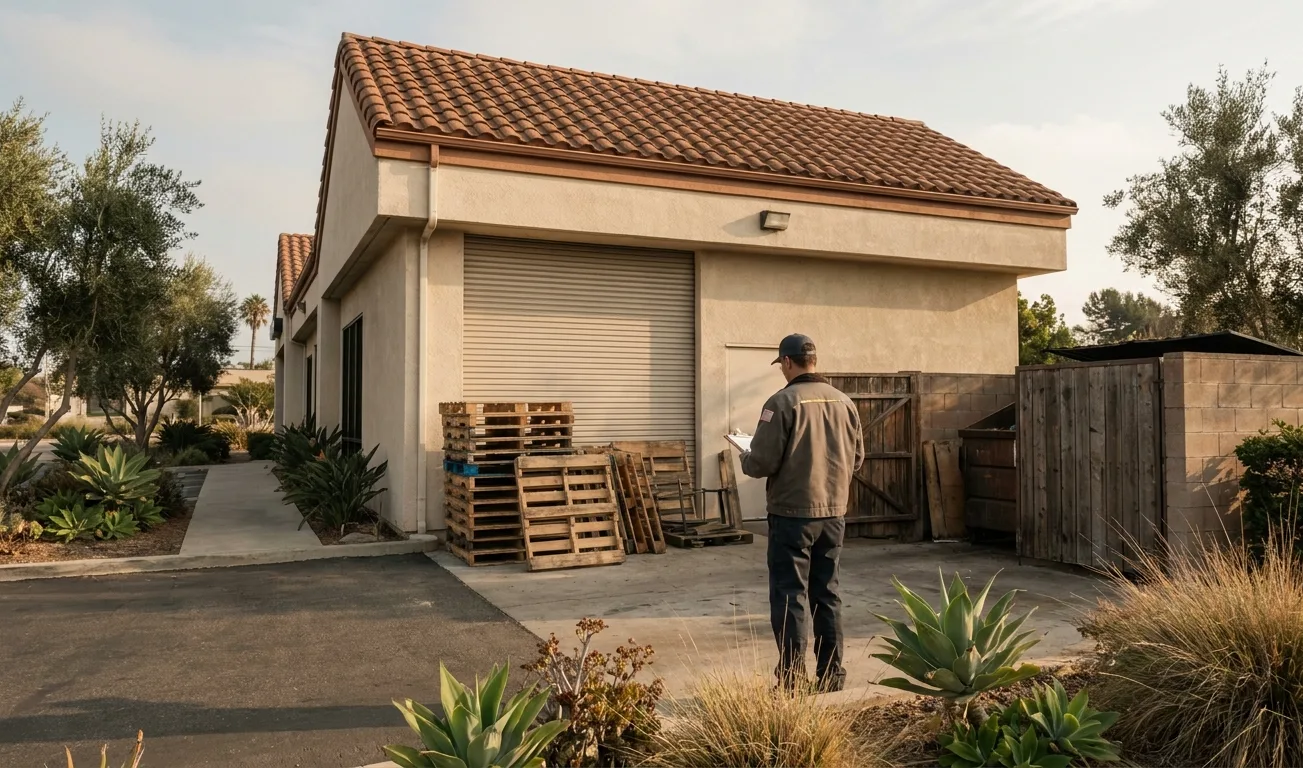
A house can be closed and left closed. A trading premises has doors that open for deliveries, roller shutters that stand up for most of the working day, and a waste area that concentrates food in one place at the back. Every one of those is a permanent route that cannot simply be sealed away, so the emphasis shifts from exclusion alone toward exclusion plus monitoring.
Where the file has to satisfy an inspector as well as control rodents, Rodent Control Chula Vista keeps station maps, visit dates and findings in a form somebody else can read.
Deliveries are the commonest route in
Cardboard cases are one of the most reliable ways rodents enter a building, and a stockroom that takes pallets several times a week is taking that risk several times a week. Where deliveries are handled and how quickly packaging is broken down and removed matters more than most operators expect.
Shared structures mean shared problems
In a multi-unit building or a strip, animals travel roof voids, service ducts and suspended ceilings across tenancy boundaries without reference to anybody's lease. Treating one unit while the one next door is untouched frequently just moves the problem sideways. Where a building-wide approach is what is actually needed, we say so, including when that is inconvenient for whoever is paying.
What a Commercial Programme Looks Like Here
Scheduled visits rather than reactive call-outs, with the interval set by what the premises actually is — a food business under constant delivery pressure is not a self-storage unit.
Exterior bait housings placed on the routes the animals genuinely use, anchored, marked on a plan, and opened and recorded every visit. Consumption across successive visits is the useful output: a station being cleared each time tells you where the pressure is coming from.
Interior work is mechanical rather than chemical. We do not put rodenticide inside a building, because an animal that takes bait indoors dies indoors — in a ceiling void or a wall cavity, above a kitchen, at the least convenient possible moment.
Documentation with every visit, because for a food premises the record is part of the point.
Kitchens, Stockrooms and Waste Areas
These are the three places we spend most of the time. Kitchens because the harbourage is behind and beneath equipment that rarely moves, and because heat and water are both there. Stockrooms because of the cardboard. Waste areas because a bin store that is overfilled, propped open or too close to the building sustains a population a few metres from the back door, and no amount of internal work addresses a supply that close.
What We Will Tell You Plainly
If the structure has a problem we cannot solve with exclusion — a roller shutter that has to stand open for trade, a shared void you do not control, a neighbouring unit that is the actual source — you will hear it early and in writing. We would rather set that expectation than invoice a monthly visit against a source nobody is addressing.
★ FAQ
Frequently Asked Questions
Yes, and on most food premises that is the only workable arrangement. Visits are scheduled to suit the operation rather than the other way round.
No. An animal that takes bait indoors dies indoors — in a ceiling void or a wall cavity, above a kitchen, at the least convenient moment. Interior work is mechanical; rodenticide stays outside in anchored housings.
A great deal. Animals travel roof voids and service ducts across tenancy boundaries without reference to anybody's lease, so treating one unit while the next is untouched usually moves the problem sideways. Where a building-wide approach is needed we will say so in writing.
Every visit, because for a food premises the record is part of the point. Station locations, consumption, findings and any recommendation, in a form an inspection will accept.
📍 On the map
How a Commercial Programme Runs
Sealed first, monitored after, and written down at every visit
We walk the delivery bay, the waste enclosure, the roof line and every shared void, close what is open, then put a numbered monitoring circuit on what is left and service it on a schedule you can show an inspector.