
Rodent Control in Bonita, CA
Large lots and older construction in the Sweetwater valley, worked perimeter first.
- Large-lot inspections
- Horse property aware
- Perimeter first
Book your free inspection
- Fast, courteous service
- Clear, upfront pricing
We are answering the South Bay line now.





Ground Before Building
More land between the road and the house means more places to shelter on the way in. On these lots the survey starts well away from the walls.
Raised Foundations Are Common
A good deal of Bonita predates slab construction, so the subfloor void is a live part of the job rather than an afterthought.
Outbuildings Count
Barns, tack rooms and detached garages hold feed, bedding and cover. Sealing the house alone on a property like this rarely settles it.
Rodent Control in Bonita
Bonita sits in the Sweetwater River valley on lots that are considerably larger than anything in the eastern villages, and a good deal of its housing predates the slab-on-grade construction that dominates the rest of the South Bay. Both facts change the job.

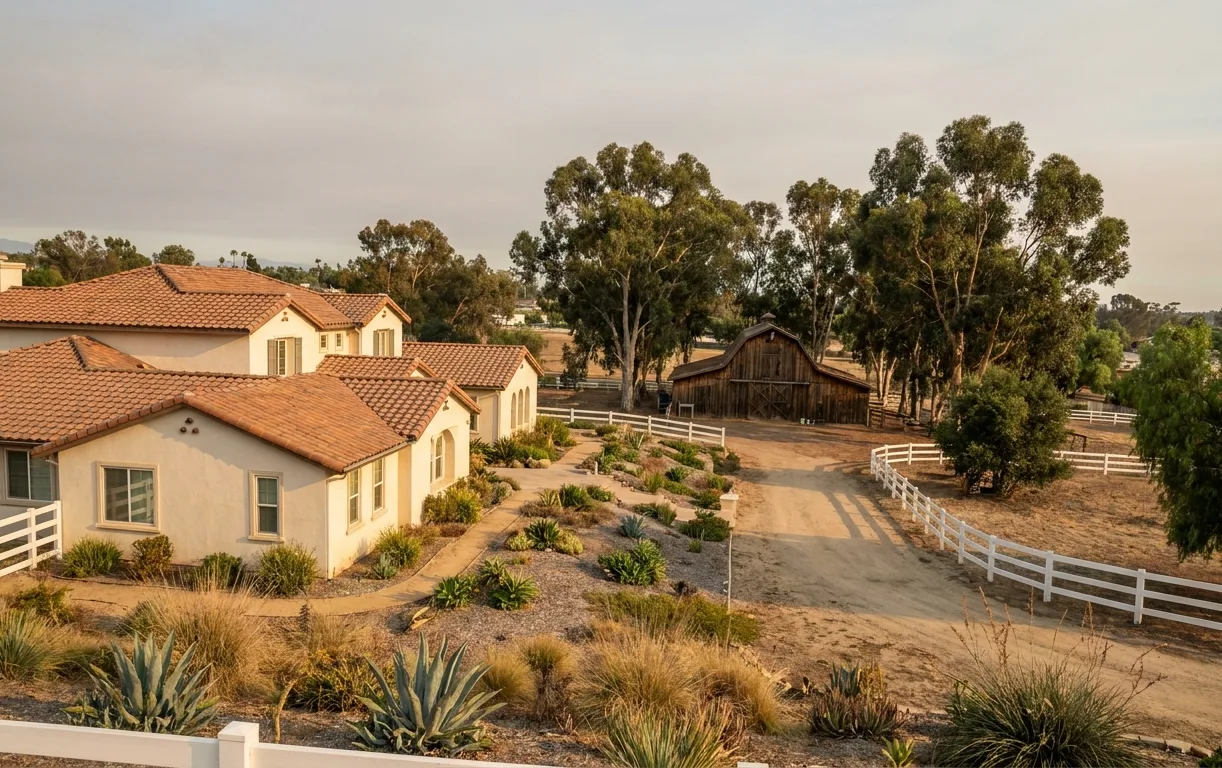
Larger lots mean more ground between the road and the house, more outbuildings, and frequently a stable, tack room or feed store. Feed is the single most reliable rodent attractant there is, and a property with horses on it has a permanent population regardless of how well the house is sealed. The realistic objective is a defended house rather than an empty property.
Barns, tack rooms and detached garages hold feed and cover, so Rodent Control Chula Vista surveys the whole site here rather than just the house.
Older construction, different entry points
Where Bonita homes sit on a raised foundation rather than a slab, the subfloor void becomes the space that matters. Crawl space vents with corroded or torn screens are the commonest entry we find here, and they are frequently the only one. The river corridor itself supplies Norway rats as well as the roof rats that dominate elsewhere in the city, so the species question genuinely goes both ways in Bonita.
How Rodent Work Is Actually Done
Rodent control is a structural trade more than a chemical one, and that is true whether the property is in Bonita or three miles away. An animal enters a building at a specific opening, lives in a specific cavity, and travels a fixed route between the two. Deal with those three things and the infestation ends. Miss one and it returns, usually within a season.
Identification before anything else
Which animal you have decides everything that follows. Roof rats are caught high, in voids and along rafters. House mice are caught within a few metres of wherever they are feeding. Norway rats are caught low, at ground level and below. A building sealed against one is frequently still open to another, so we settle the species from droppings, rub marks and gnawing before a single trap is placed.
Trapping before sealing, never the other way round
Closing a building that still has an active population inside it traps animals in wall voids and roof spaces, where they die out of reach. In this climate that becomes a serious odour problem within days, and the only remedy is opening up the structure to find them. So the order on every Bonita job is the same: identify, trap out, confirm the catch rate has gone to nothing, then close the building.
Sealed in metal, not foam
Every opening that admitted an animal is closed in galvanised steel mesh, hardware cloth or metal flashing. Expanding foam is chewed straight back through, and steel wool pulls out by the strand. This is the part of the job that decides whether the result lasts, and it is the part most often skipped because it is slow and invisible.
What the grounds are contributing
Most of what keeps pressure high around a Bonita property is fixable and sits within a few metres of the building: unstripped palm skirts, dense ivy on a block wall, fruit left where it falls, woodpiles stacked against the house, bins without lids, pet food left out, and irrigation leaks that make one garden the only reliable water for a hundred metres in August. We point all of it out plainly, including the parts that are somebody else's to fix.
★ FAQ
Frequently Asked Questions
It matters more than almost anything else. A raised foundation puts the work in the subfloor and at the crawl space vents; a slab puts it at the weep line and the garage. Bonita has both, sometimes on the same road, so we look before quoting.
Often, yes. The Sweetwater corridor supports Norway rats, which burrow and stay low, alongside the roof rats that dominate elsewhere in the city. A building sealed carefully at the roofline and left open at the foundation is protected against the wrong animal.
We can work outbuildings, and on a property with feed storage that is usually where the population actually lives. What we will not do is promise an empty parcel — the honest objective is a defended house and managed outbuildings.
It is the commonest entry we find on this housing. Sixty years of corrosion leaves a screen that looks intact from two metres away and has a hole in it at arm's length. They get replaced rather than patched.
📍 On the map
How We Approach a Bonita Property
Walk the whole site, then work inward
We inspect outbuildings, feed storage, tree canopy, irrigation and the open-space boundary before we look at the house, because that is nearly always where the activity originates. Often the highest-value change is not a treatment at all — sealed feed containers or a trimmed palm removes more pressure than repeat spraying.