

Rodent Exterminators in Montgomery, Chula Vista
Older residential mixed with light industrial, which changes the arithmetic entirely.
- Rats, mice and squirrels
- Straightforward pricing
- Local technicians
Book your free inspection
- Fast, courteous service
- Clear, upfront pricing
We are answering the South Bay line now.





Commercial Neighbours
Waste handling, loading areas and yards holding pallets sustain populations no residential street produces on its own.
Sealing Has to Be Complete
Under this much outside pressure, nearly sealed is not sealed. Every opening has to be closed, not most of them.
We Name the Source
If the real problem is a yard two doors down we will say so in writing, whether or not it wins us the job.
Rodent Control in Montgomery
Montgomery mixes older residential with light industrial and commercial in a way that most of Chula Vista does not, and that mix is the defining feature of the rodent work here.
Commercial neighbours change the arithmetic
Waste handling, loading areas, food premises and yards holding pallets and material all sustain populations at a scale a residential street cannot. A house backing onto any of them is not dealing with its own rodents; it is dealing with the overflow from a permanent source it has no control over. Sealing the building still works and is still worth doing, but the expectation has to be set honestly.
Older housing, structural openings
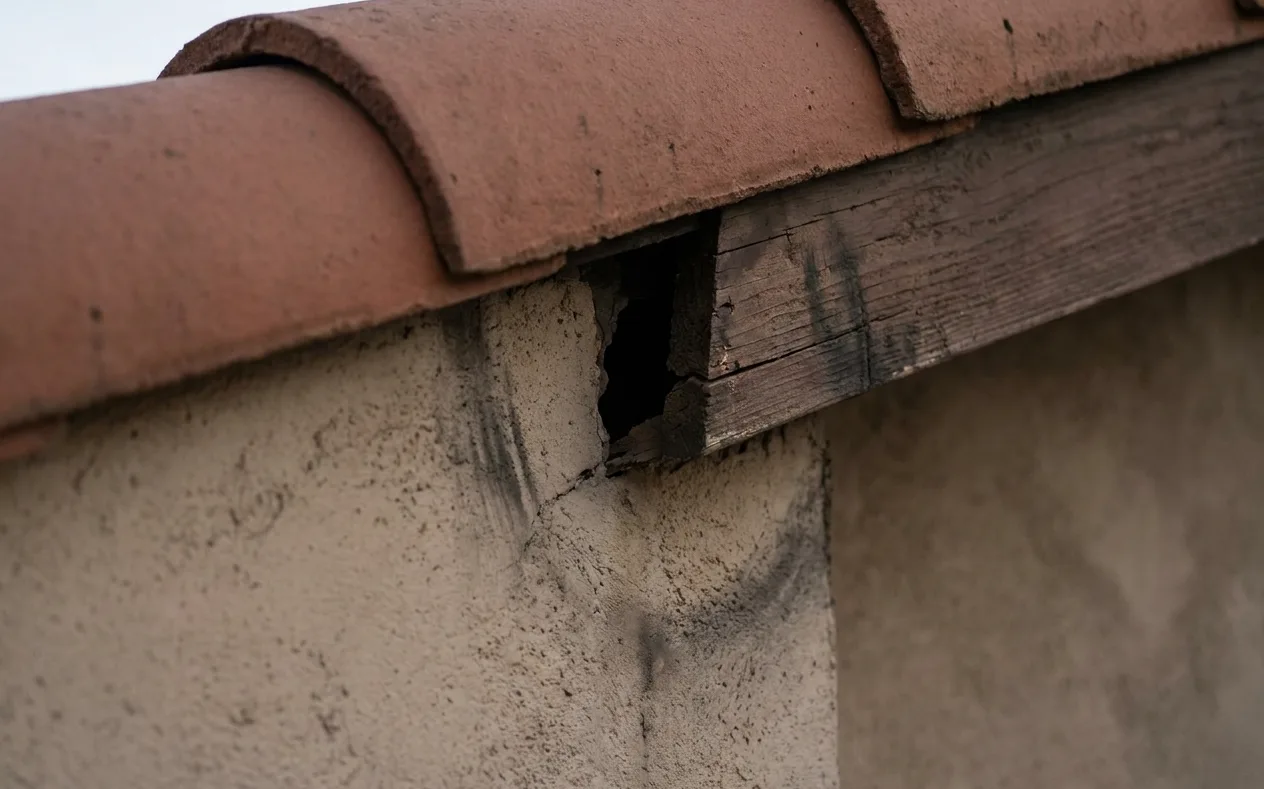
The residential stock here is older, frequently on raised foundations, and much of it has been altered over the decades. The entries we find are structural rather than accidental — an abandoned utility penetration from a long-ago remodel, a corroded crawl space screen, a gap at a roof junction where an addition meets the original building.
How Rodent Work Is Actually Done
Rodent control is a structural trade more than a chemical one, and that is true whether the property is in Montgomery or three miles away. An animal enters a building at a specific opening, lives in a specific cavity, and travels a fixed route between the two. Deal with those three things and the infestation ends. Miss one and it returns, usually within a season.
Identification before anything else
Which animal you have decides everything that follows. Roof rats are caught high, in voids and along rafters. House mice are caught within a few metres of wherever they are feeding. Norway rats are caught low, at ground level and below. A building sealed against one is frequently still open to another, so we settle the species from droppings, rub marks and gnawing before a single trap is placed.
Trapping before sealing, never the other way round
Closing a building that still has an active population inside it traps animals in wall voids and roof spaces, where they die out of reach. In this climate that becomes a serious odour problem within days, and the only remedy is opening up the structure to find them. So the order on every Montgomery job is the same: identify, trap out, confirm the catch rate has gone to nothing, then close the building.
Sealed in metal, not foam
Every opening that admitted an animal is closed in galvanised steel mesh, hardware cloth or metal flashing. Expanding foam is chewed straight back through, and steel wool pulls out by the strand. This is the part of the job that decides whether the result lasts, and it is the part most often skipped because it is slow and invisible.
Commercial neighbours change the arithmetic here, and where a yard two doors down is the real source Rodent Control Chula Vista puts that in writing whether or not it wins the job.
What the grounds are contributing
Most of what keeps pressure high around a Montgomery property is fixable and sits within a few metres of the building: unstripped palm skirts, dense ivy on a block wall, fruit left where it falls, woodpiles stacked against the house, bins without lids, pet food left out, and irrigation leaks that make one garden the only reliable water for a hundred metres in August. We point all of it out plainly, including the parts that are somebody else's to fix.
★ FAQ
Frequently Asked Questions
Your building can be sealed properly, and that still works. What we will not claim is that it removes the source — waste handling and stored material next door sustain a population at a scale a residential street cannot, and you have no control over it.
At the joins. Abandoned utility penetrations from an old remodel, gaps where an addition meets the original roof, and services that were rerouted and never sealed behind. On this housing the entries are structural rather than accidental.
No. Baiting under continuous pressure reduces numbers temporarily and leaves the route wide open. If anything, high pressure is the argument for sealing properly rather than against it.
Yes, and in this area the two are frequently the same problem. Scheduled, documented service for a kitchen or a stockroom is a different arrangement from a residential visit, and we will set it out separately.
📍 On the map
What the Work Actually Involves
Methodical approach delivers complete control and prevention
Our structured treatment process ensures nothing gets overlooked while addressing both current infestations and future prevention for your Montgomery property.